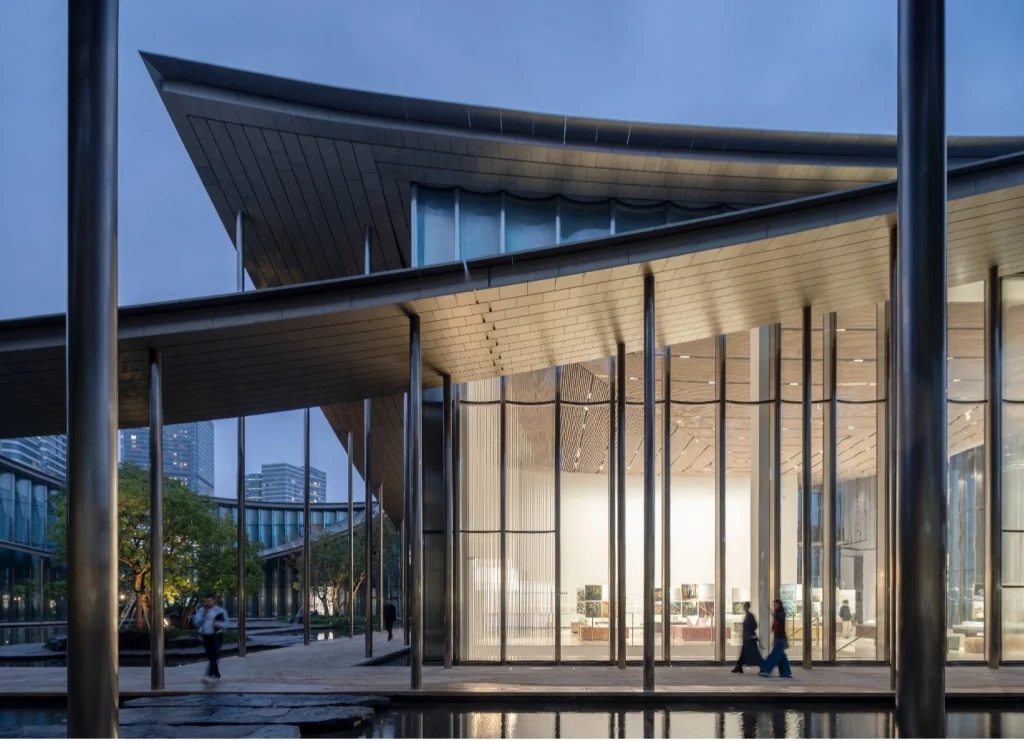
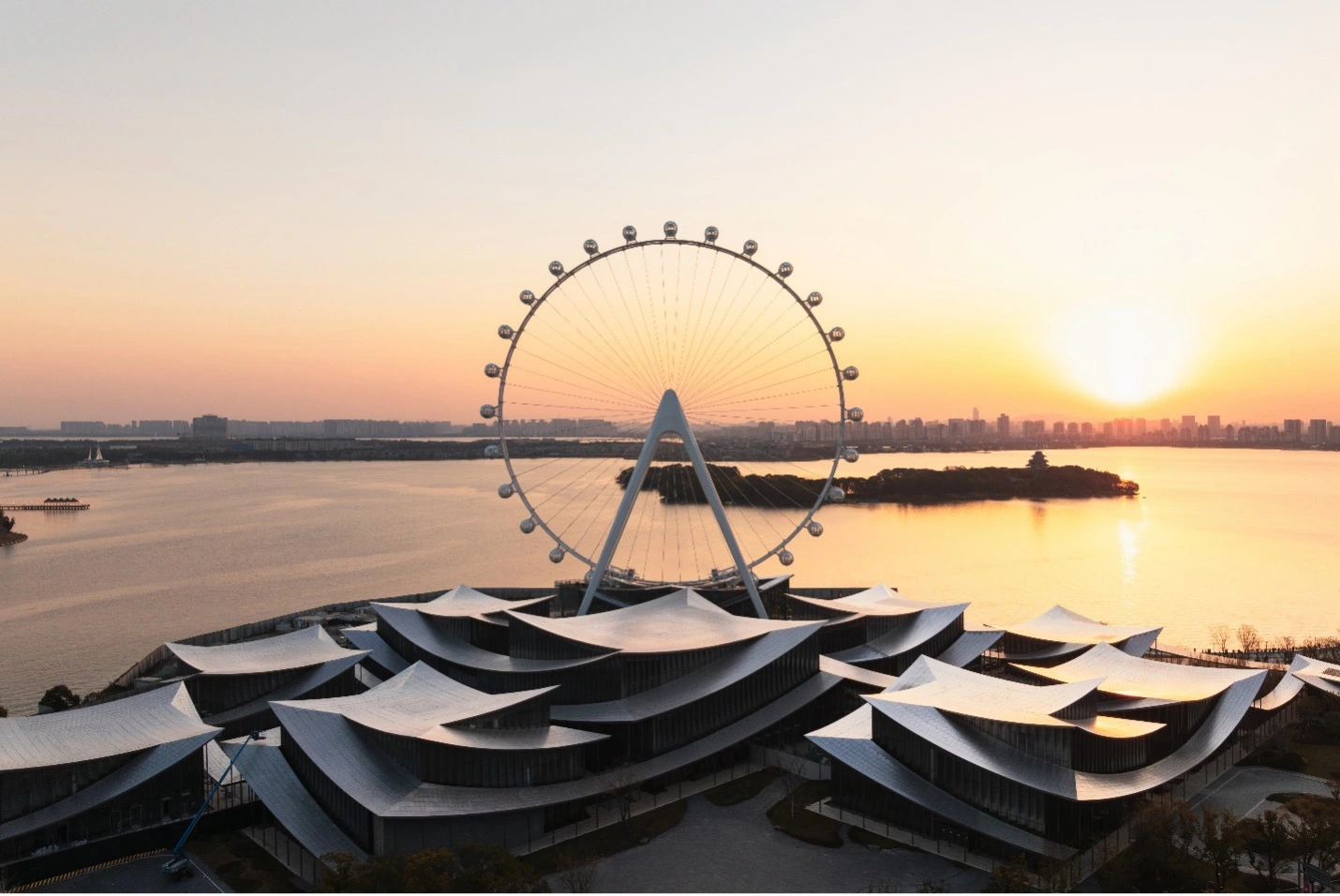
Soon to open to the public with its inaugural exhibition, Materialism, the Suzhou Museum of Contemporary Art (Suzhou MoCA) marks a significant new addition to China’s evolving cultural landscape. Designed by BIG–Bjarke Ingels Group, the 60,000-square-metre institution reinterprets the spatial language of Suzhou’s historic gardens through a contemporary architectural lens. Conceived as a village of twelve pavilions gathered beneath a sweeping ribbon-like roof, the museum draws upon centuries of local urban, architectural, and landscape traditions while establishing a new platform for contemporary art, design, and civic life.
Curated by BIG, Materialism serves as the museum’s opening exhibition, inviting visitors on a journey through the material foundations of human creativity—from primordial stone to recycled matter. The exhibition reflects the museum’s broader ambition: to explore the relationship between culture, craft, technology, and the built environment.
Commissioned by Suzhou Harmony Development Group and designed by BIG in collaboration with ARTS Group and Front Inc., the museum occupies a prominent site along the shores of Jinji Lake. Positioned between city and water, the project extends Suzhou’s long-standing dialogue between architecture and landscape into the twenty-first century. The museum is scheduled to officially open in 2026.
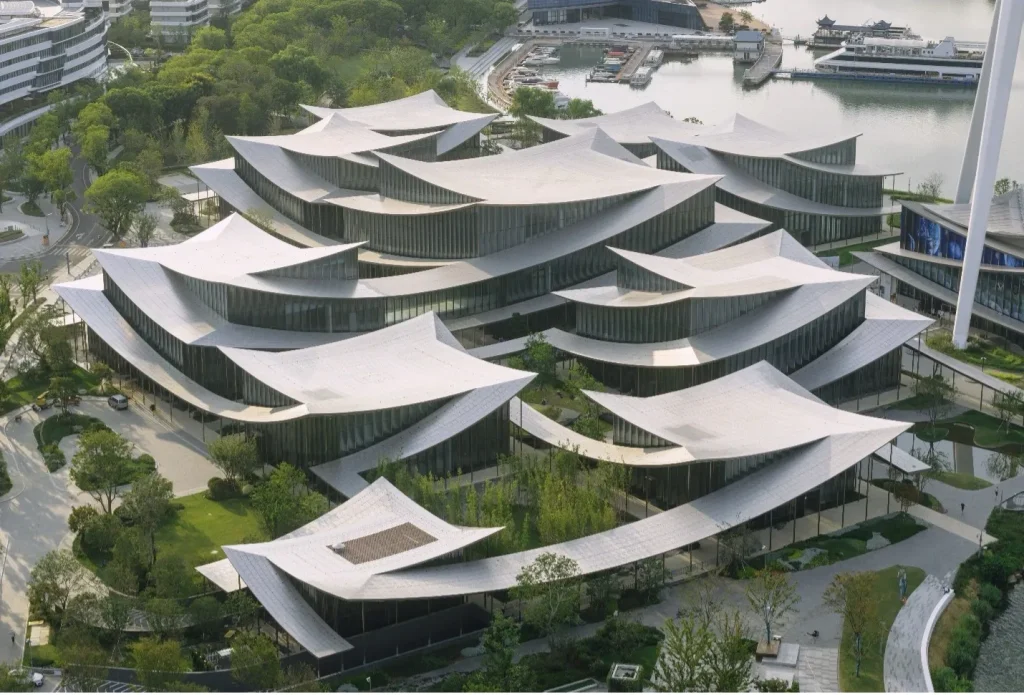
At the heart of the design is a contemporary interpretation of the lang (廊), the covered corridor that has historically structured movement through Suzhou’s classical gardens. Here, ten interconnected pavilions unfold beneath a continuous roofscape whose gentle undulations echo the silhouette of traditional tiled eaves. Rather than a singular monumental object, the museum is conceived as a sequence of spaces and experiences—an architectural promenade shaped by light, views, and moments of encounter.
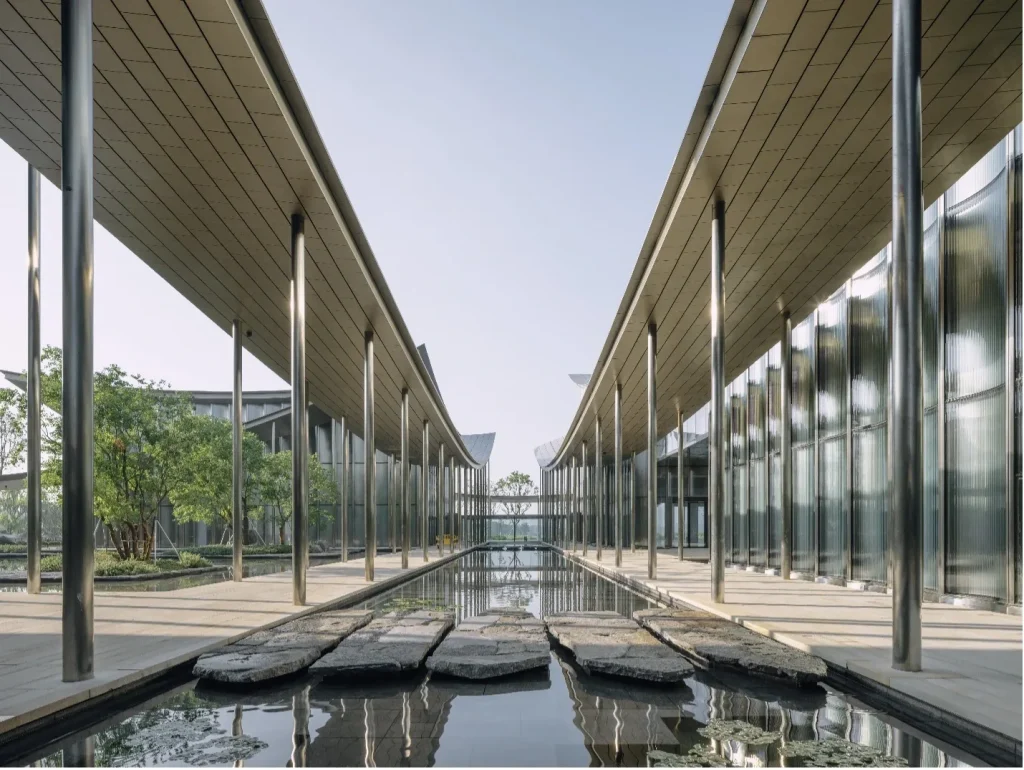
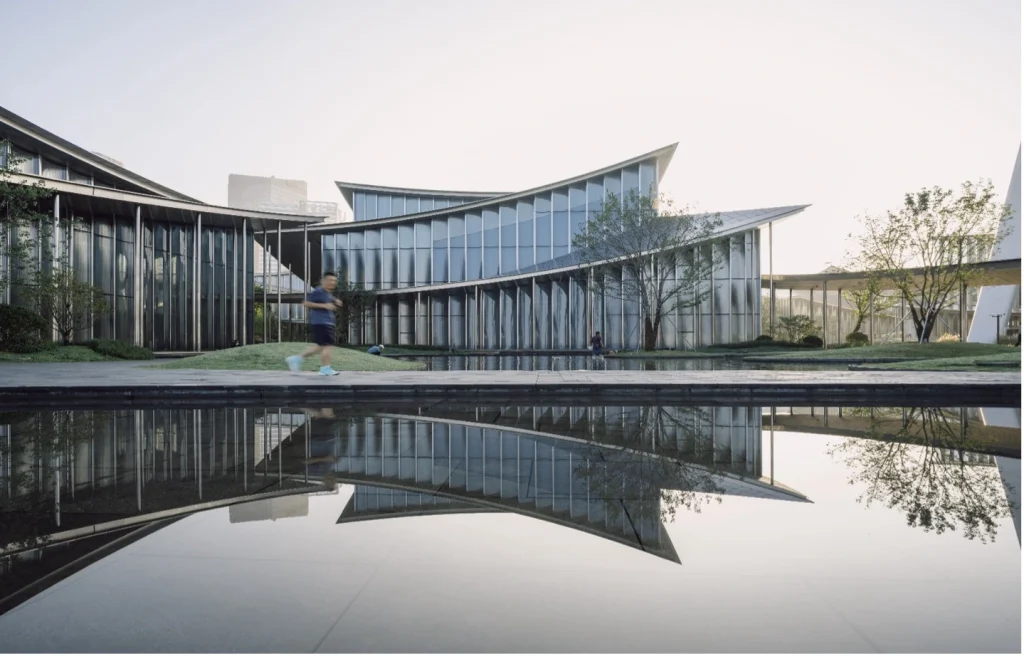
Two additional pavilions, set to be completed next year, will extend gracefully over Jinji Lake and connect back to the main complex via covered walkways. Together, the ensemble creates a fluid architectural landscape that blurs the boundaries between building, garden, and waterfront, offering a contemporary interpretation of one of Suzhou’s most enduring cultural traditions.