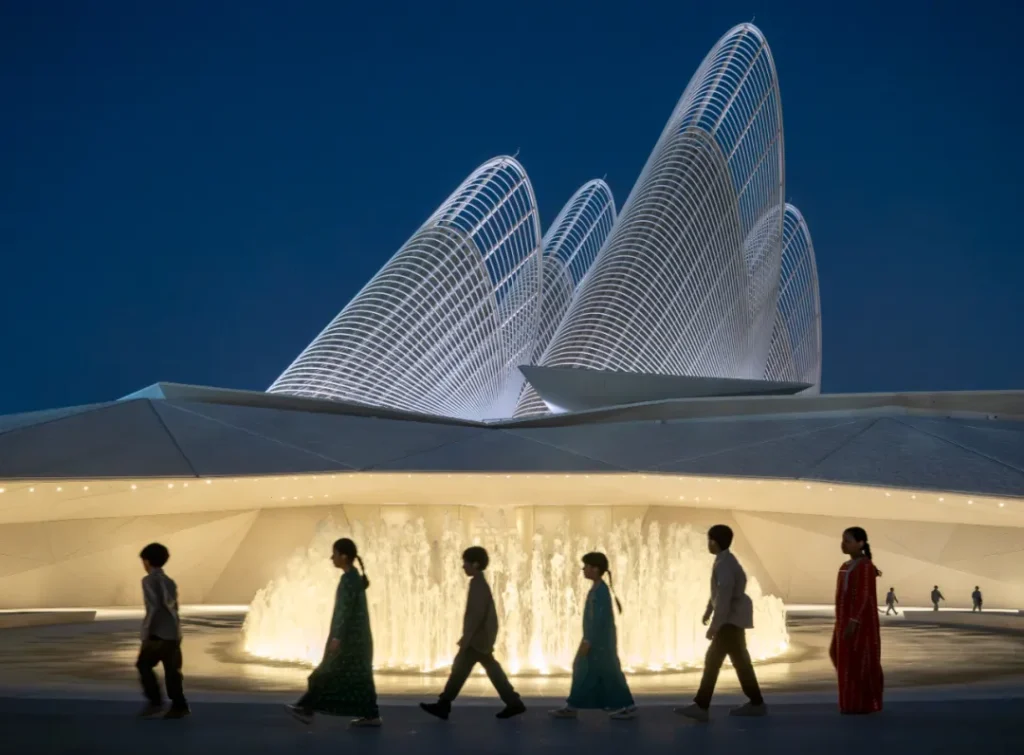
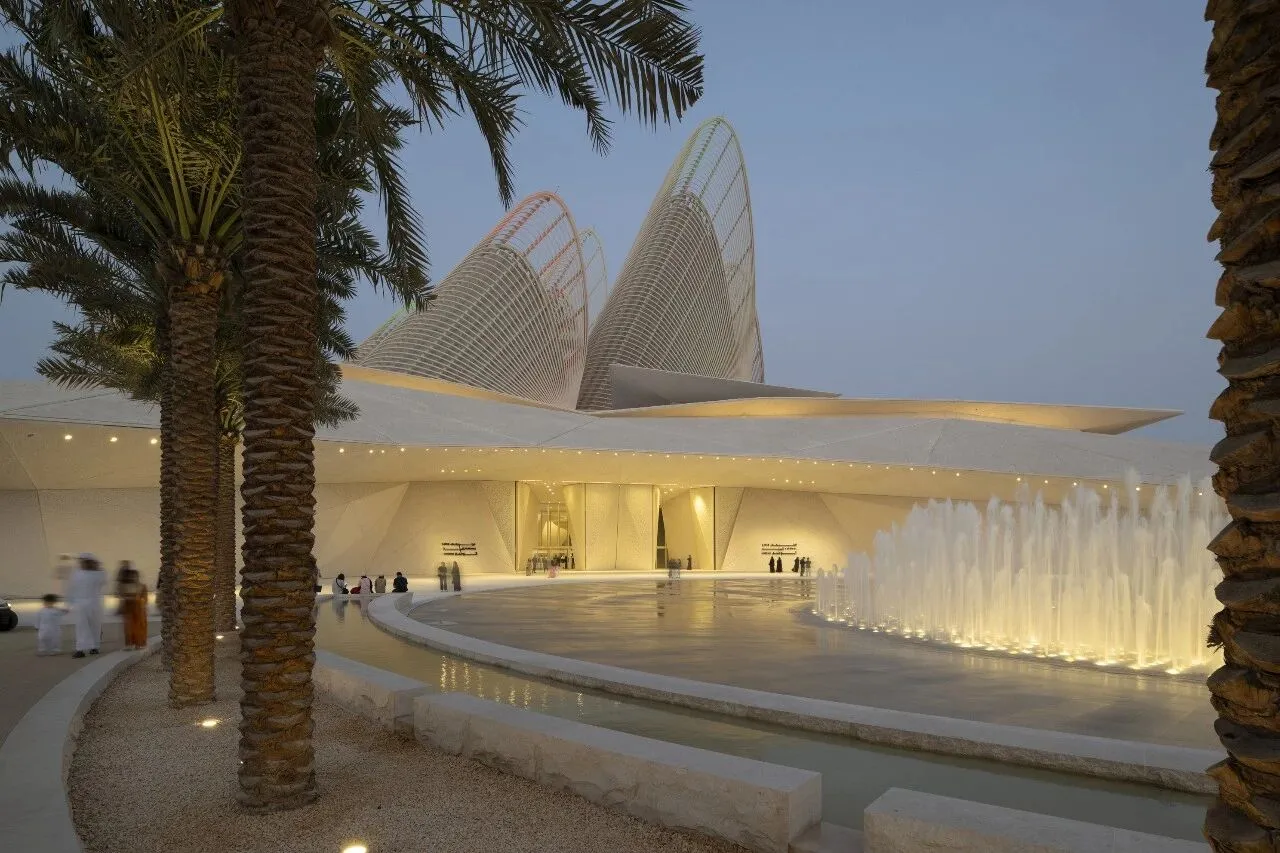
With the opening of the Zayed National Museum, Abu Dhabi gains not only a new cultural landmark but also a powerful architectural expression of national identity. Positioned at the heart of the Saadiyat Cultural District, the museum stands as a contemporary monument to the United Arab Emirates’ remarkable journey—from the earliest traces of human settlement on the Arabian Peninsula to the formation of a modern nation shaped by resilience, exchange, and ambition. Conceived as both a repository of history and a symbol of collective memory, the institution brings together the narratives, values, and cultural traditions that continue to define the UAE today.
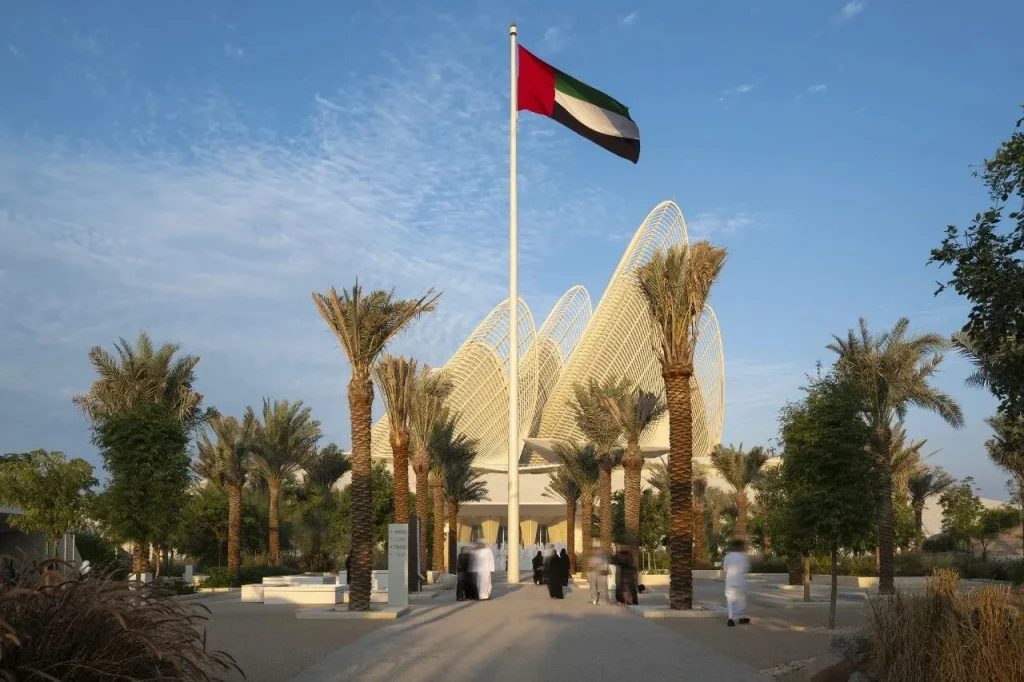
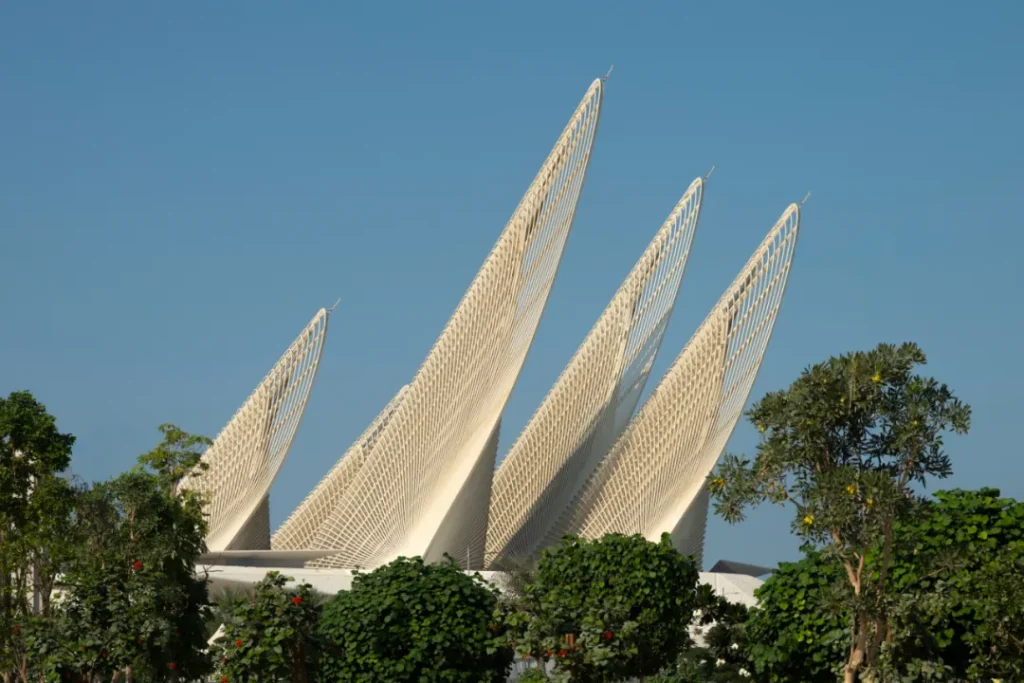
“The Zayed National Museum tells the story of Sheikh Zayed’s founding of the UAE and the many legacies he left behind, including his ambitious vision of turning the desert green. The building itself is a physical embodiment of sustainable design. Its five aerodynamic steel towers are integral to the environmental strategy, functioning as thermal chimneys that draw cool air into the public spaces below. At the same time, these sculptural elements reference Sheikh Zayed’s passion for traditional falconry and have become a defining landmark on Abu Dhabi’s skyline.”
— Norman Foster
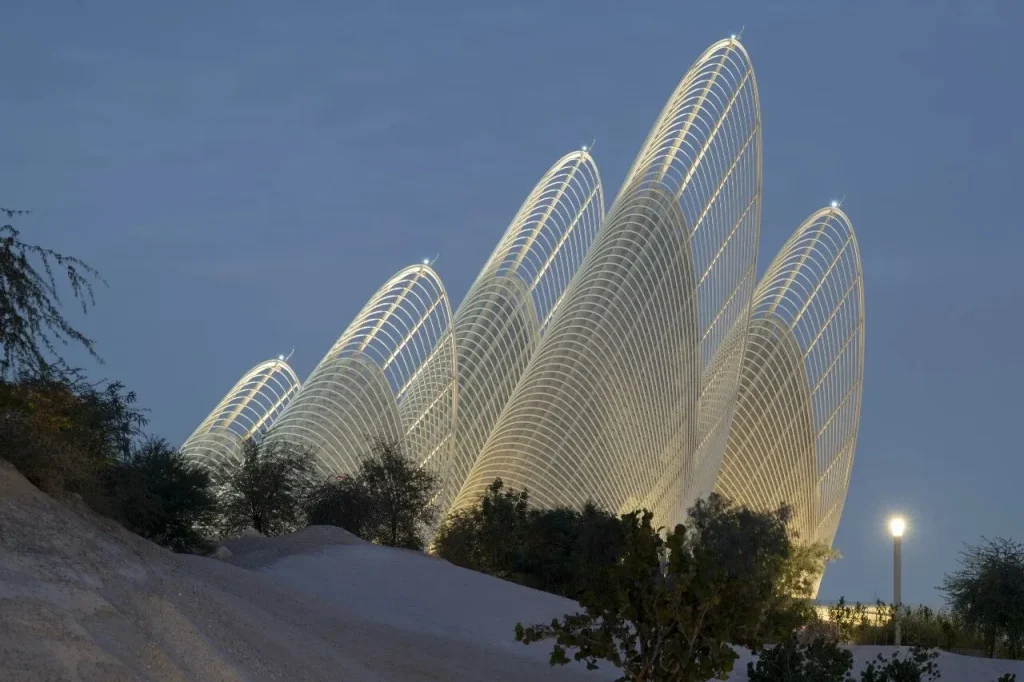
The museum’s five lightweight steel towers form the centerpiece of its natural ventilation system. Openings at their apex harness negative pressure generated on the leeward side of the wing-shaped structures, drawing warm air upward from the central atrium. Thermal currents created by heat accumulation at the tower tips further enhance air circulation throughout the building.
Fresh air is naturally cooled as it passes through a network of pipes buried deep beneath the desert terrain before being introduced into the atrium through a low-level displacement ventilation system. The towers also channel daylight into the galleries below through glazed surfaces, while each structure can be individually controlled and calibrated to respond to changing environmental conditions.
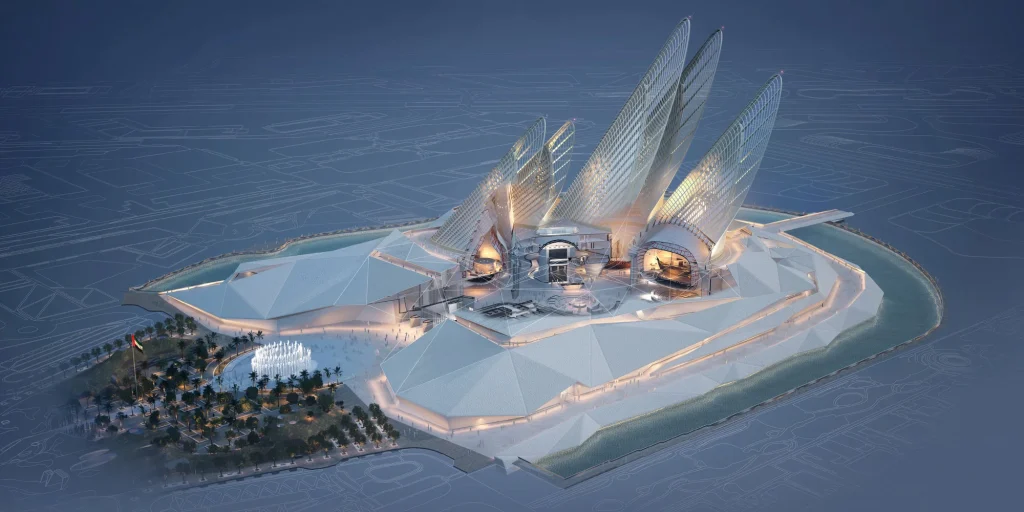
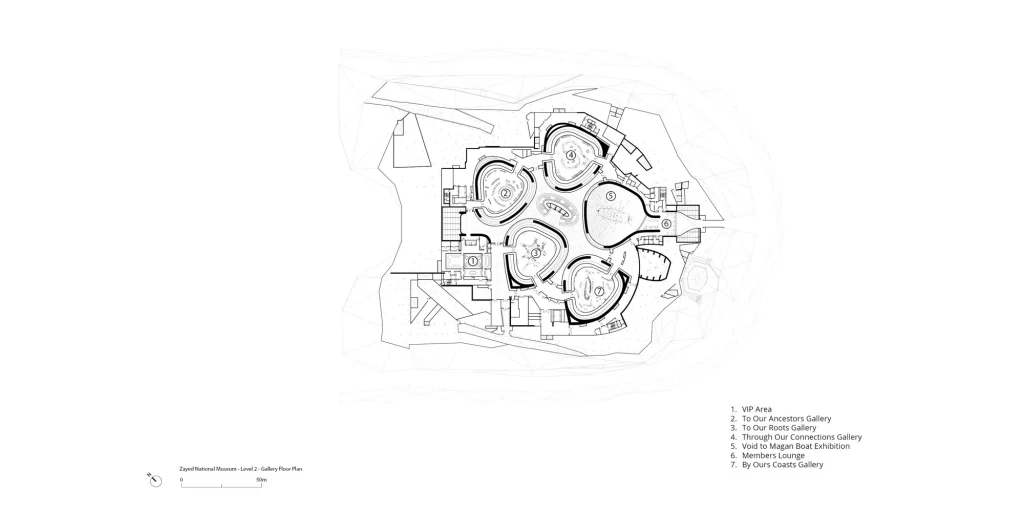
Among the museum’s six permanent galleries, four are housed within distinctive floating pods suspended above Al Liwan. These exhibition volumes provide highly controlled environmental conditions, ensuring the long-term preservation of valuable artefacts and works of art.
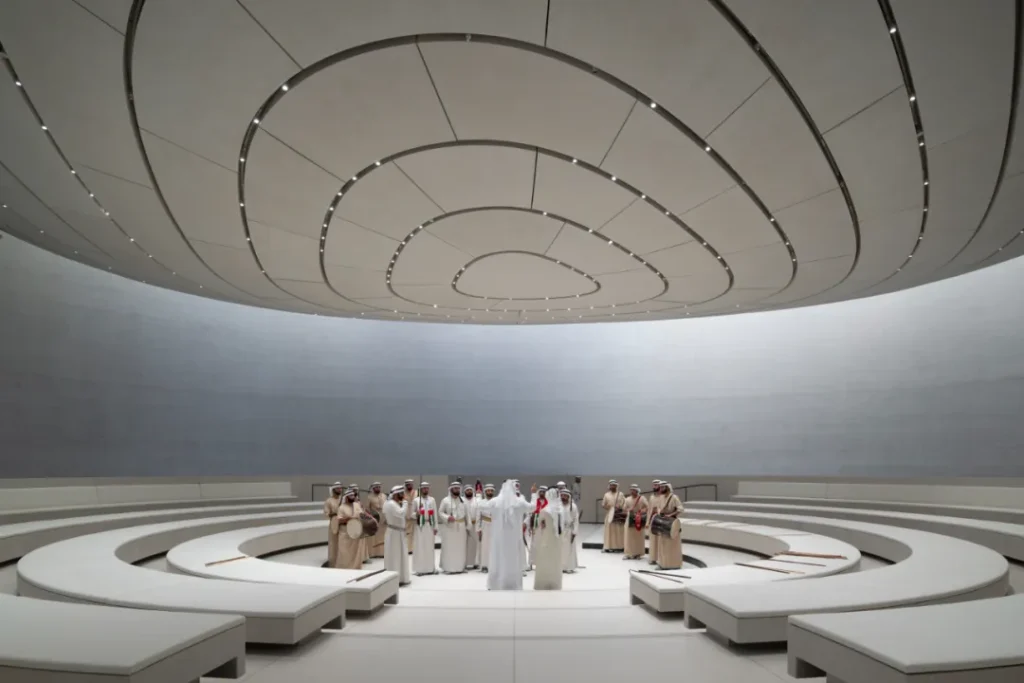
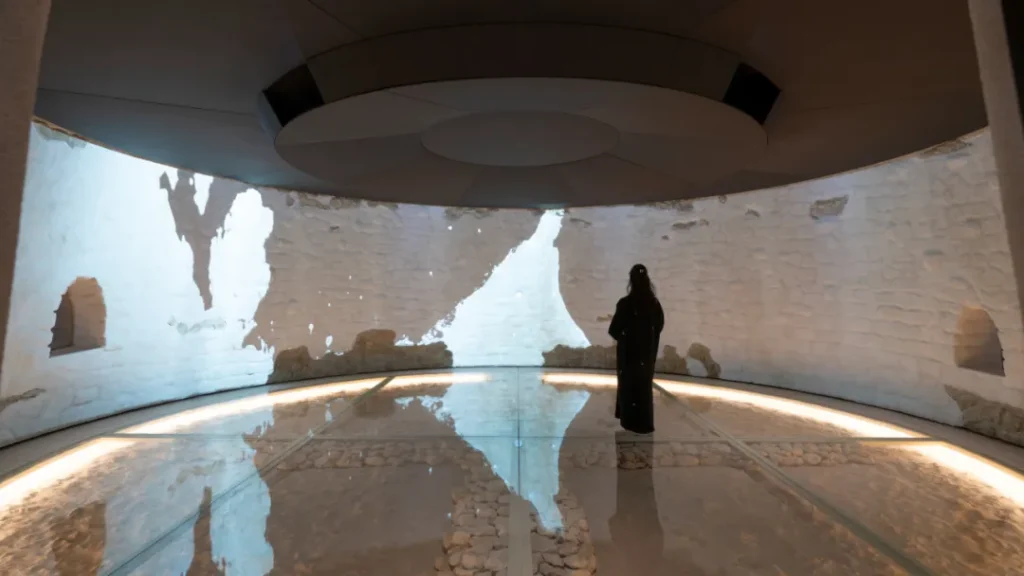
The towers’ glazed façades incorporate triple-laminated glass with a high-density mesh interlayer, carefully moderating the intensity of natural light entering the museum’s halls and galleries. Above each pod, electrochromic skylights automatically adjust their transparency in response to external daylight conditions, further refining the visitor experience while protecting sensitive collections.
Beyond the museum itself, the Al Masar Garden establishes a seamless connection between the institution and the coastline, reflecting Sheikh Zayed’s profound appreciation for nature.
Integrating indigenous landscapes with elements of Emirati cultural heritage, the garden has been conceived as a new civic destination for social gathering, recreation, and contemplation.Visitors ascend through a shaded, tree-lined pathway that rises from ground level to a viewing platform positioned at the summit of the landscaped mound, adjacent to the bases of the steel towers. From here, panoramic views unfold across the surrounding district and coastline.
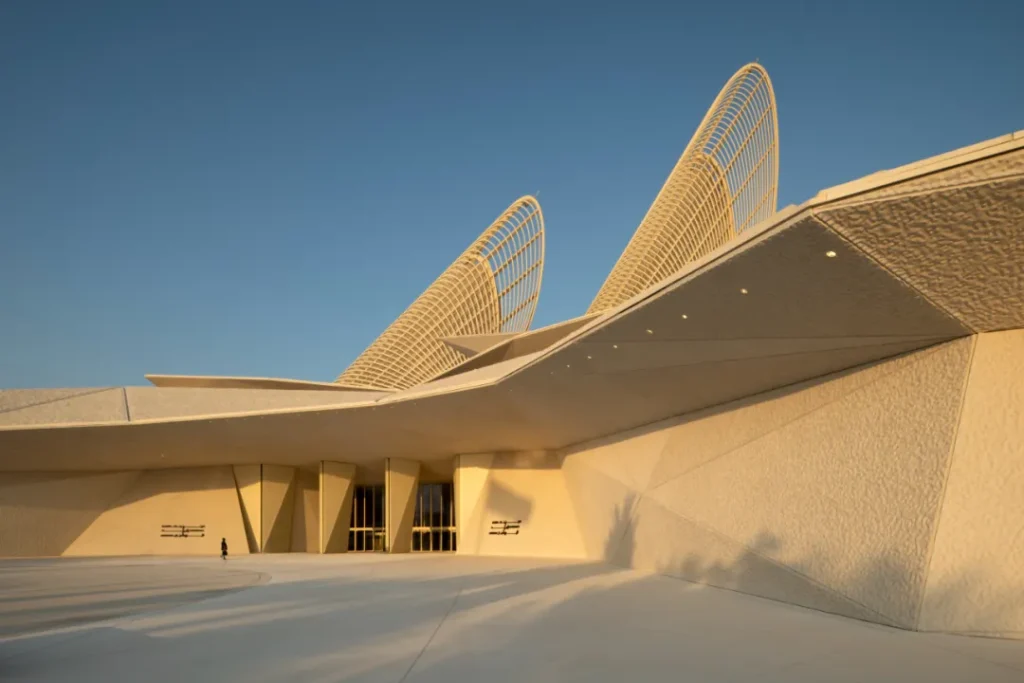
Material selection throughout the project draws deeply from the UAE’s environmental and historical context. The architecture references the vernacular traditions of all seven emirates, echoing the subtle variations in the tones of desert earth found across the country. Continuing this narrative, both the museum’s exterior envelope and interior spaces are rendered in the warm off-white hues characteristic of Saadiyat Island, grounding the project firmly within its geographical and cultural setting.