In the Fall-Winter 2026 narratives, fashion spaces transcend mere backdrops to become dynamic coordinates of shifting cultural power. From classical palaces to digital landscapes, contemporary creative directors are utilizing architecture, material, and spatial interventions to rewrite brand archives. Fashion here manifests as a site of philosophical tension—a grand vision of identity constructed through physical mass. Below, we decrypt the 12 most architecturally significant showspaces of the season.
01. CHANEL: Metamorphosis Under Construction
Palace: Grand Palais, Paris
Creative Direction: Matthieu Blazy
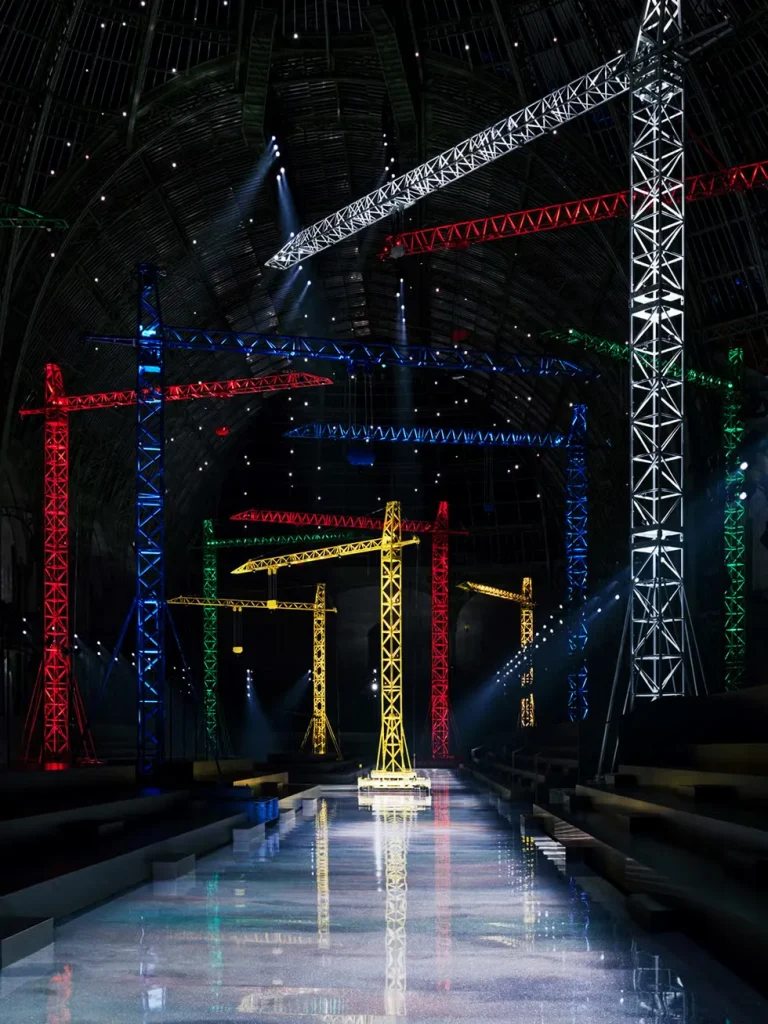
Matthieu Blazy disrupted traditional Chanel romanticism by transforming the historic Grand Palais into an active, industrial construction site. Flanked by a series of monumental, toy-brick-like cranes, the 6,000-ton steel structure of the palace became a metaphor for continuous self-building. The reflective, iridescent silver runway mirrored the cold grid of the cranes, staging a dualistic dialogue between the pragmatism of daytime utility and the fantasy of nocturnal elegance, ultimately reflecting the urban woman’s autonomy in constructing her own identity.
02. Dior: The Floating Amphitheater of Flâneurs
Palace: Tuileries Garden, Paris
Creative Direction: Jonathan Anderson
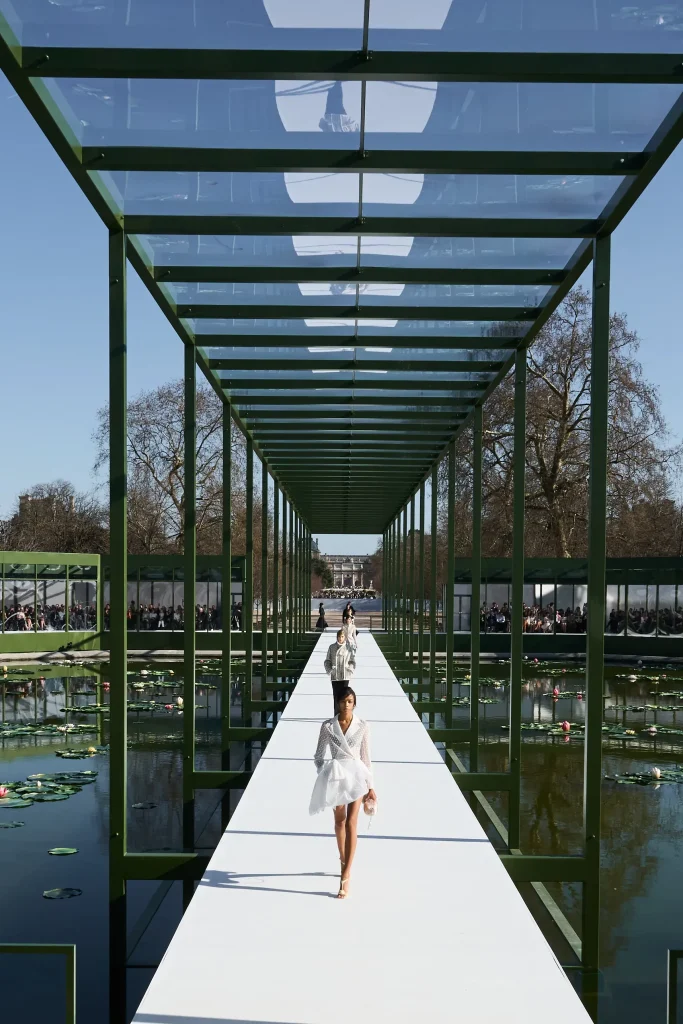
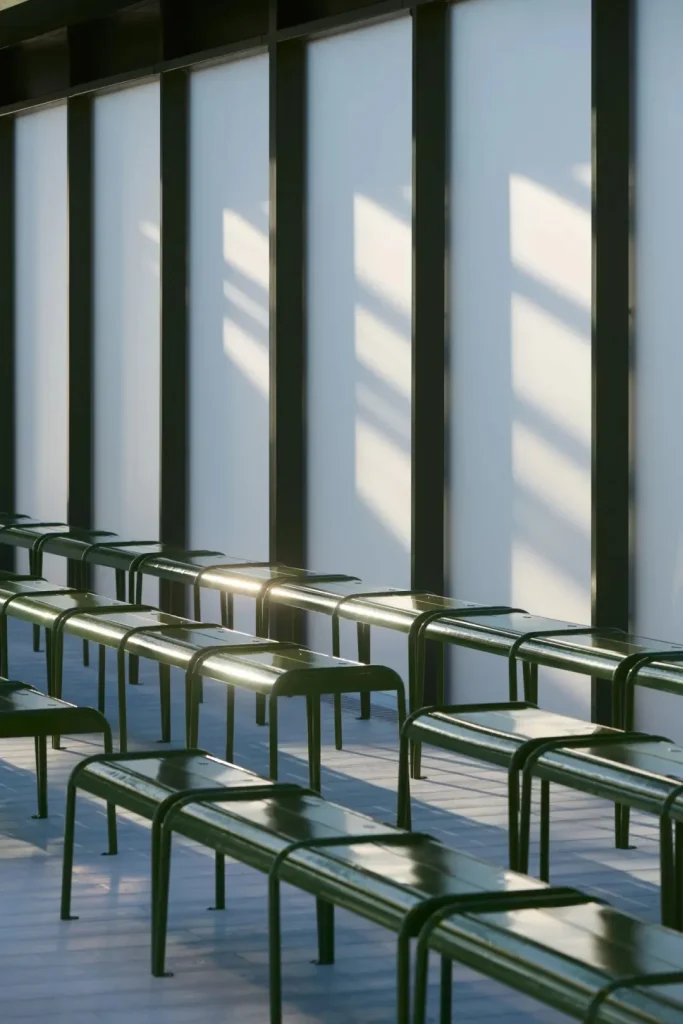
Drawing from the 17th-century promenade culture of the Tuileries Garden, Jonathan Anderson erected a circular pavilion floating directly over the historical octagonal basin. The green runway transformed the social ritual of wandering—the Baudelairean flânerie—into a structured performance of looking and being seen. As water mist from the central fountains caught the light, the spatial layout bridged fashion history and landscape architecture, reflecting the shifting colorways of Monet’s Water Lilies from the nearby Orangerie Museum onto the fluid geometries of the garments.
Dior Fall-Winter 2026/27
03. Louis Vuitton: Digital Hills in Classical Halls
Palace: The Louvre, Paris
Creative Direction: Nicolas Ghesquière
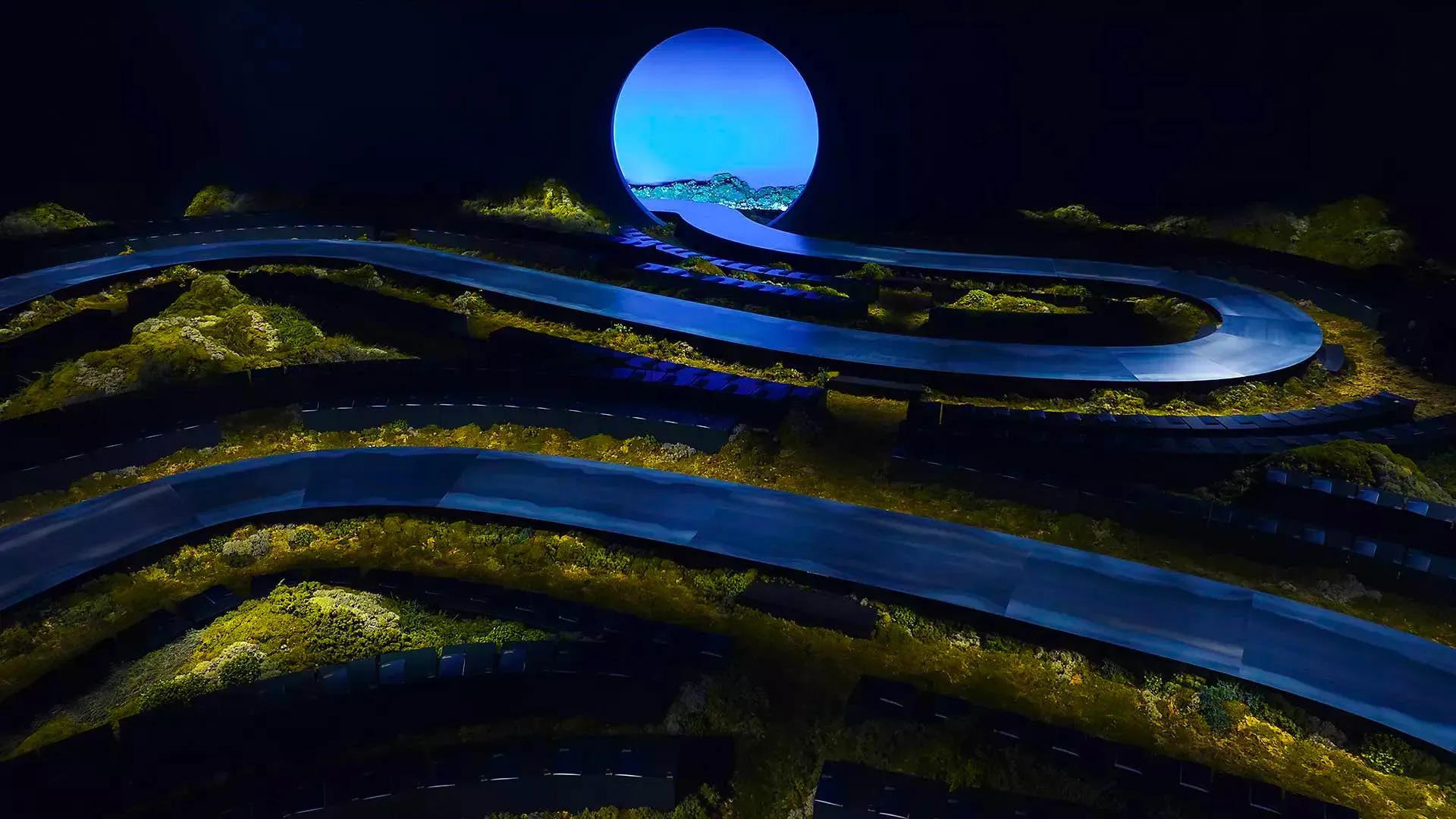
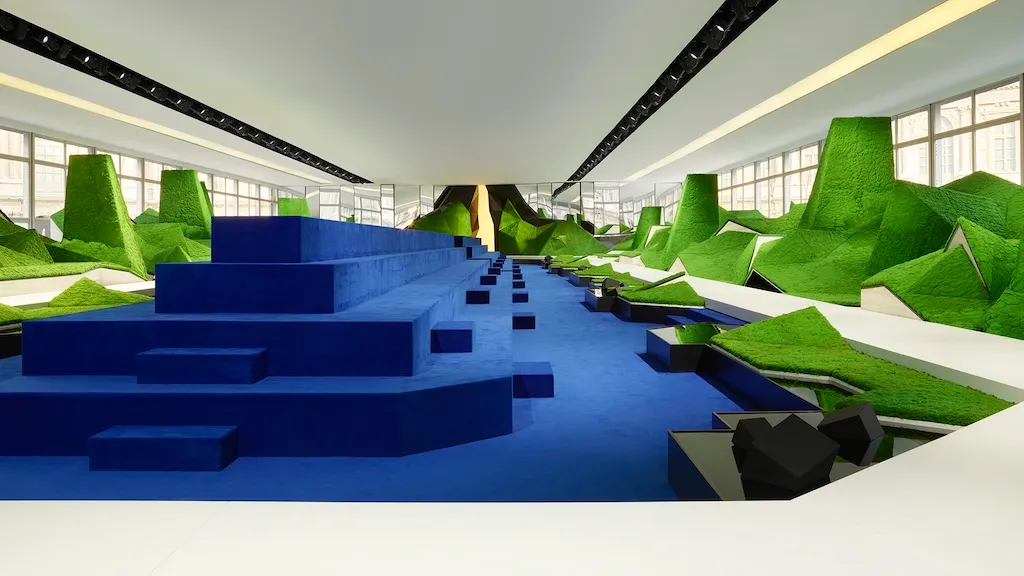
Nicolas Ghesquière traced his creative origins back to the peaks and meadows of the Jura Valley, reconstructing these natural topographies through a surreal, digital lens inside the Louvre. Created in collaboration with artist Nazar and scenic designer Jeremy Hindle, the showspace featured a series of abstract, interconnected “digital hills.” The sculptural landscape fused raw wilderness with hard-edged futurism, providing an architectural context for garments rich in nomadic signifiers, botanical textures, and structured silhouettes—a new folklore bridging pastoral memory and sci-fi futures.
04. LOEWE: The Infinite Playground of Soft Sculptures
Palace: Château de Vincennes, Paris
Creative Direction: Jack McCollough & Lazaro Hernandez
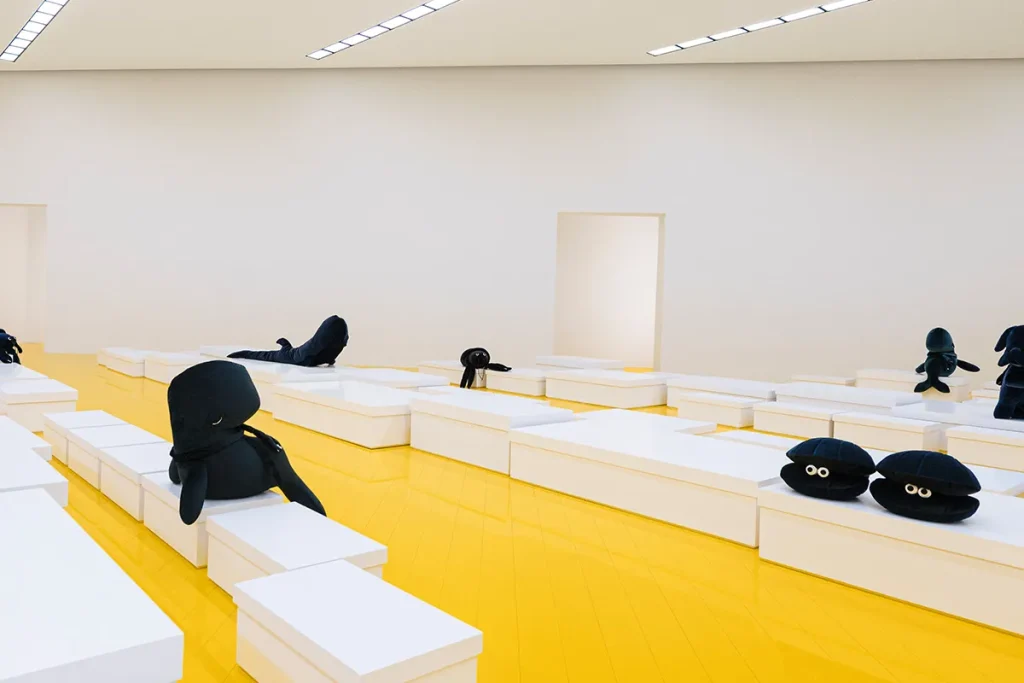
To celebrate the brand’s 180th anniversary, creative directors Jack McCollough and Lazaro Hernandez transformed the Château de Vincennes into a giant, whimsical sandbox of infinite play. The showspace was dominated by large-scale, soft marine life sculptures—including hermit crabs, clams, and octopuses—from artist Cosima von Bonin’s “The Beaux” series. Paired with seat configurations resembling giant shoeboxes, the spatial arrangement subverted the traditional seriousness of historic architecture, using playful alienation and humorous mise-en-scène to articulate a rigorous experiment in lightness and curiosity.
05. Burberry: A London Rain Midnight
Palace: Billingsgate Fish Market, London
Creative Direction: Daniel Lee
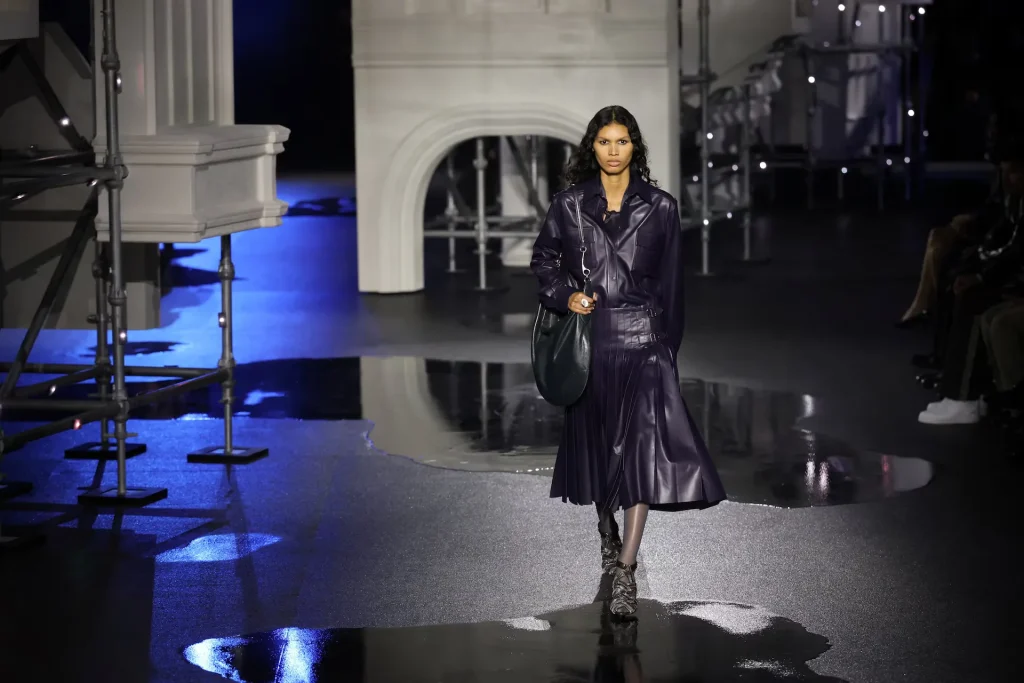
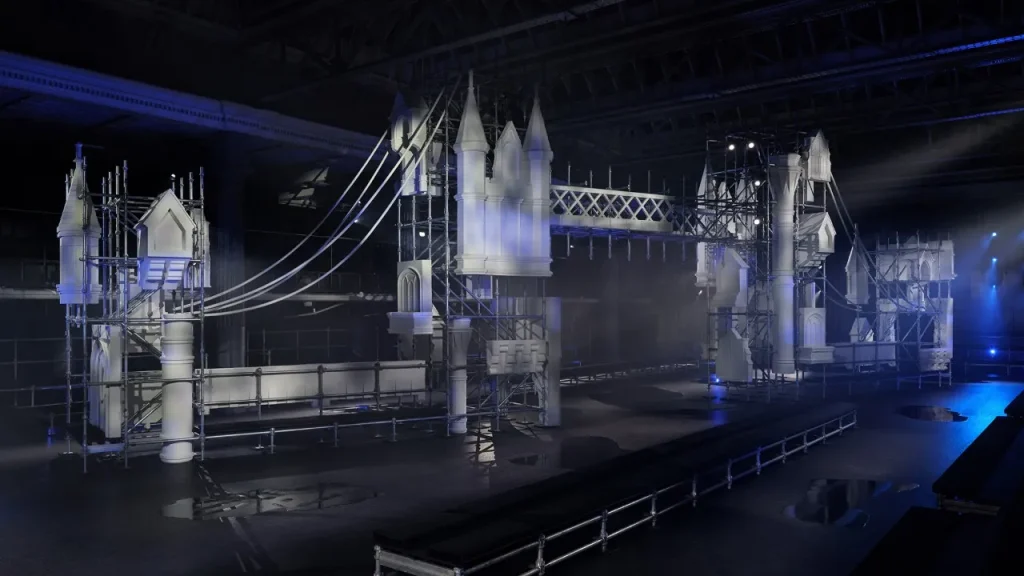
Staged within the gritty, industrial expanses of the Billingsgate London Fish Market, Daniel Lee conjured the melancholic chills of a misty London night. Suspended fragments of the London Tower collided with a raw scaffolding infrastructure and streetlights, creating a temporary theater that blurred the boundaries between the grit of Hackney and the refinement of Mayfair. The floor, punctuated by glossy resin-cast water puddles, caught the atmospheric luminescence of oncoming headlights, casting a dark, romantic glow onto modern trench coats and fluid Nova checks designed for the contemporary urban nightwalker.
06. Miu Miu: The Damask Forest of Interiority
Palace: Palais d’Iéna, Paris
Creative Direction: Miuccia Prada
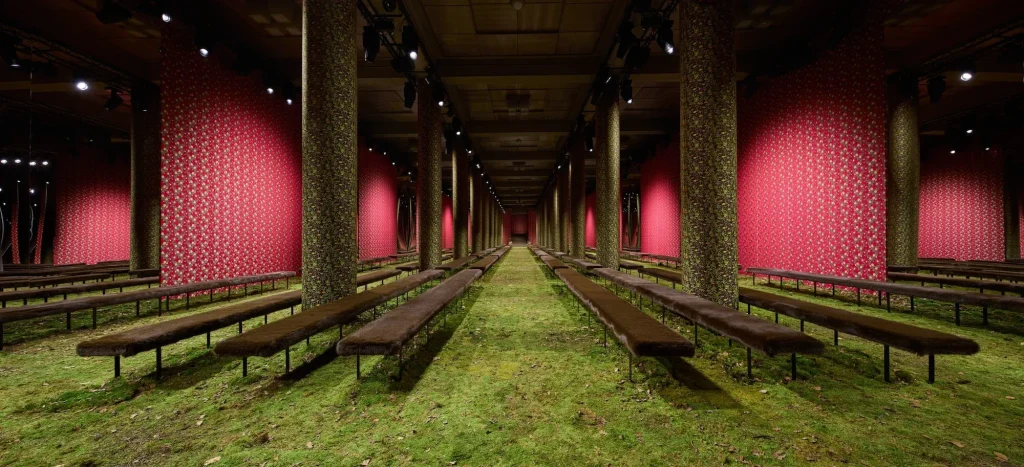
AMO reconfigured the grand, hyper-rational hypostyle hall of the Palais d’Iéna into a series of intimate, red damask-clad sanctuaries. By wrapping the monumental concrete pillars in rich fabrics and embedding reflective mirrors, the designers created an illusion of an infinite forest with moss-covered floors. This confrontation between palace architecture and primal wilderness established a space for bodily autonomy. Under the theme “Closer to the Body,” the interior scenography mirrored Eastern philosophies of introspection, transforming a public runway into a healing, private dreamscape.
07. Acne Studios: The Dark Library of Architectural Heritage
Palace: Collège des Bernardins, Paris
Creative Direction: Jonny Johansson
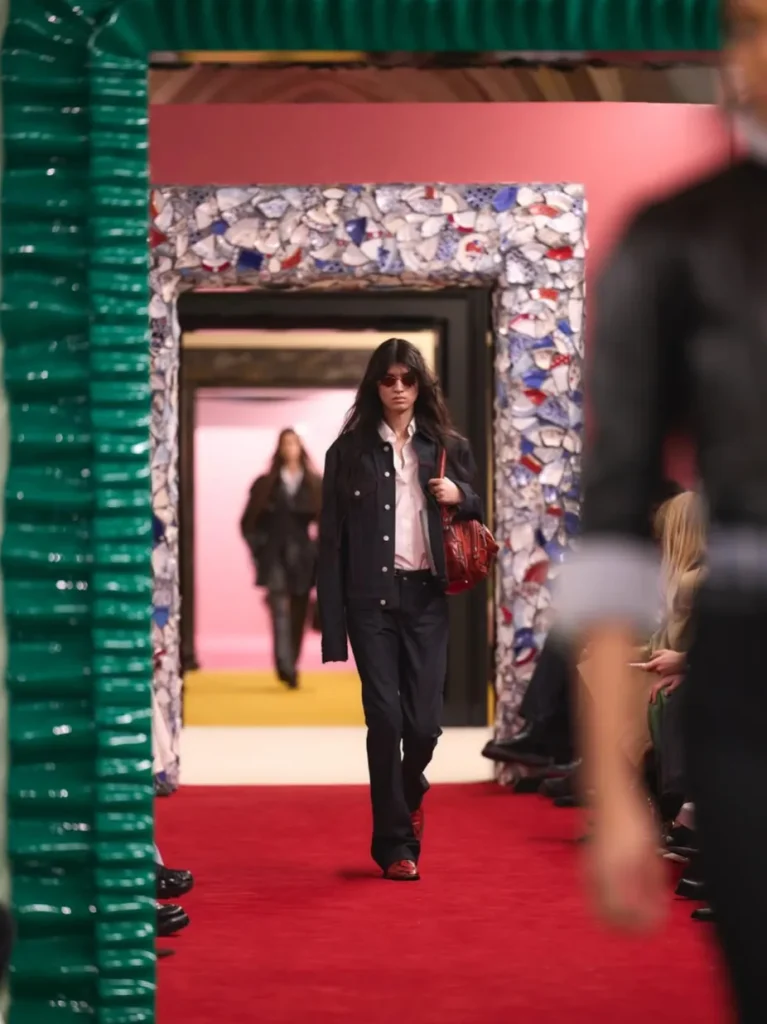
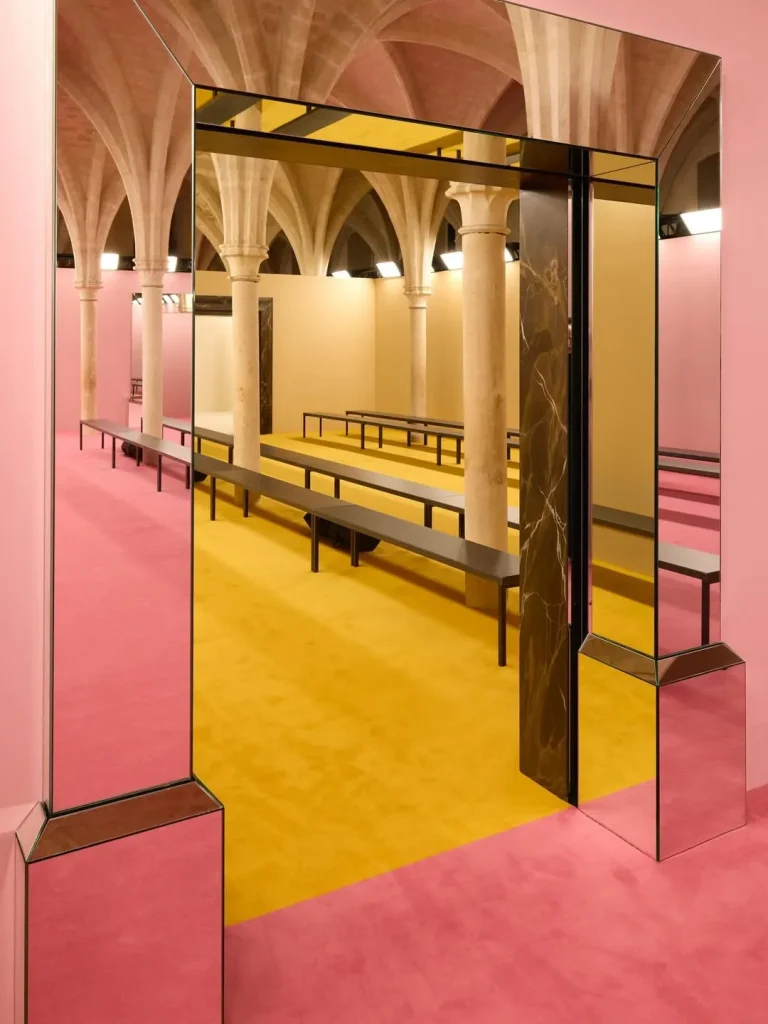
Celebrating Acne Studios’ 30th anniversary, Jonny Johansson returned to the brand’s iconic salon-style layout, evoking the disruptive atmosphere of its 2010 London presentation. Set within the Collège des Bernardins, the runway was structured as a somber, interconnected sequence of multi-colored porches serving as physical portals through time. This spatial design functioned as a living library of memory, where architectural heritage is reassessed for the future. Large-scale photographic portraits by Dutch artist Paul Kooiker lined the space, anchoring the experimental garments within a narrative of collective creative legacy.
08. ETRO: The Chromatic Portals of Nomadic Rhythms
Palace: Piazza Castello, Milan
Creative Direction: Marco De Vincenzo
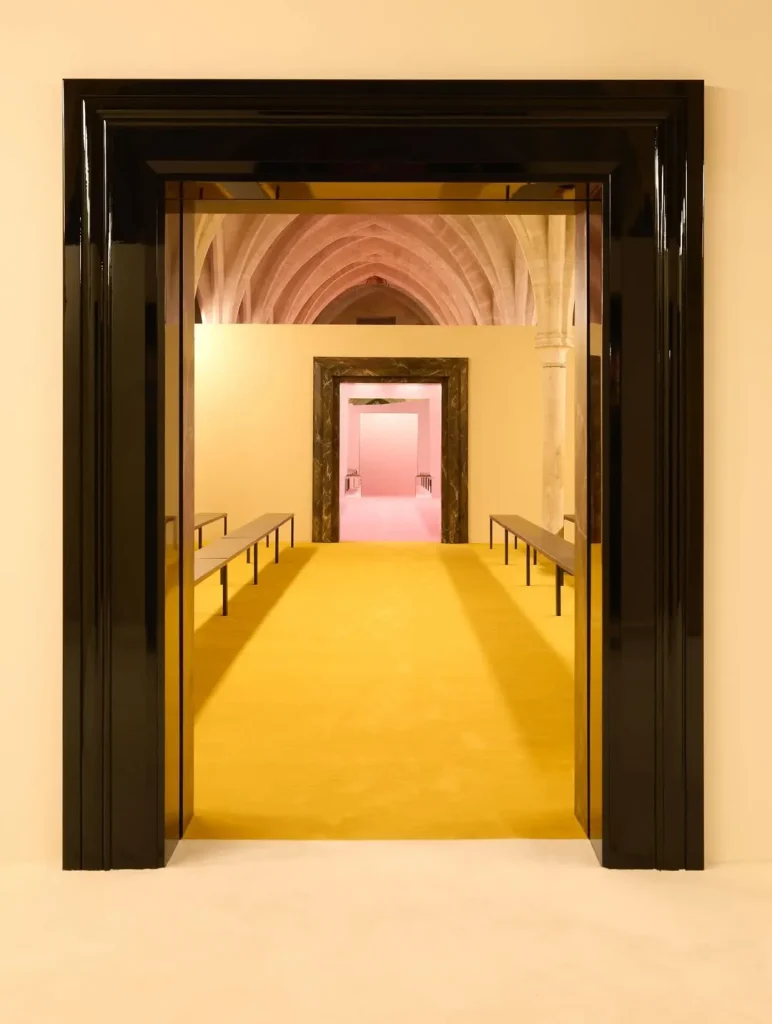
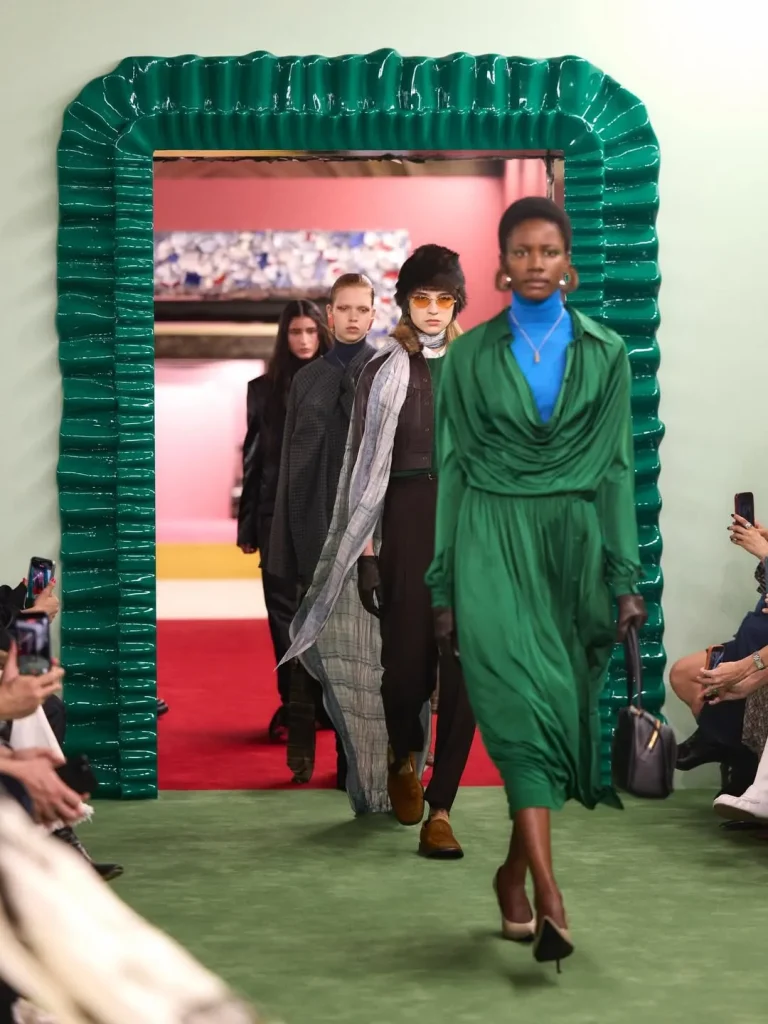
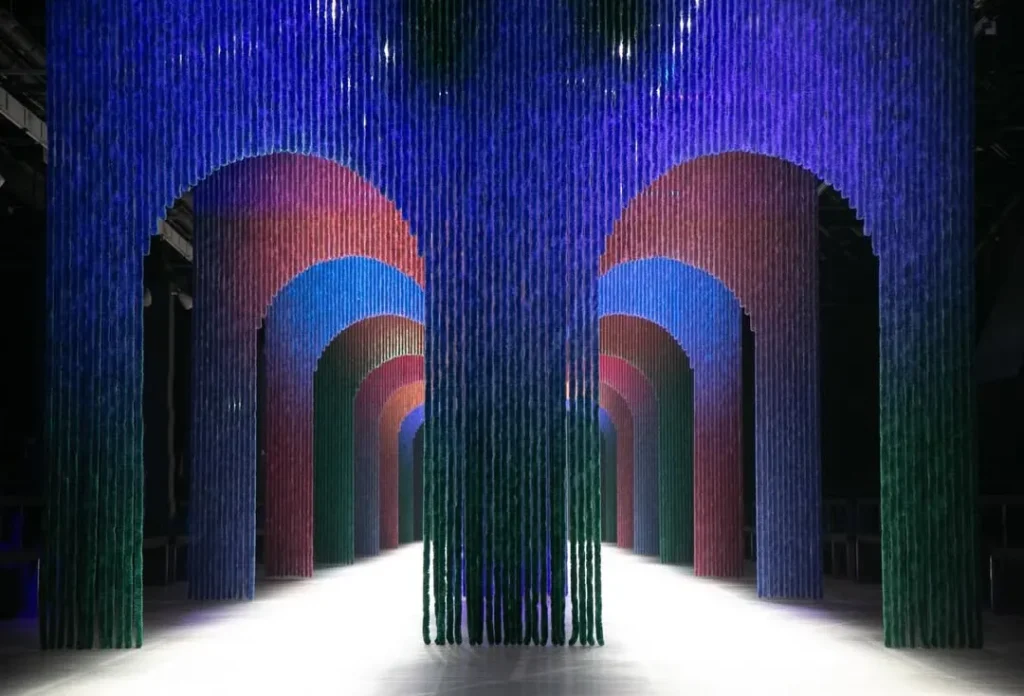
Continuing its exploration of tile art, studio Numero Cromatico developed an installation entitled “Now More than Ever” for Etro’s runway. The showspace featured seven walkable, highly tactile colored porches that established a vivid architectural rhythm across the Piazza Castello. The subtle contrasts between light, saturated hue, and material texture framed a continuous loop of cultural storytelling. Enhanced by South Korean artist Taehyoung Jeon’s fantasy animal embroideries on the garments, the space mirrored Etro’s philosophy of universal collection and deep respect for Bohemian plurality.
ETRO Fall-Winter 2026/27
09. ANREALAGE: The Thermo-Optical Cyber Mirage
Palace: Runway Void, Paris
Creative Direction: Kunihiko Morinaga
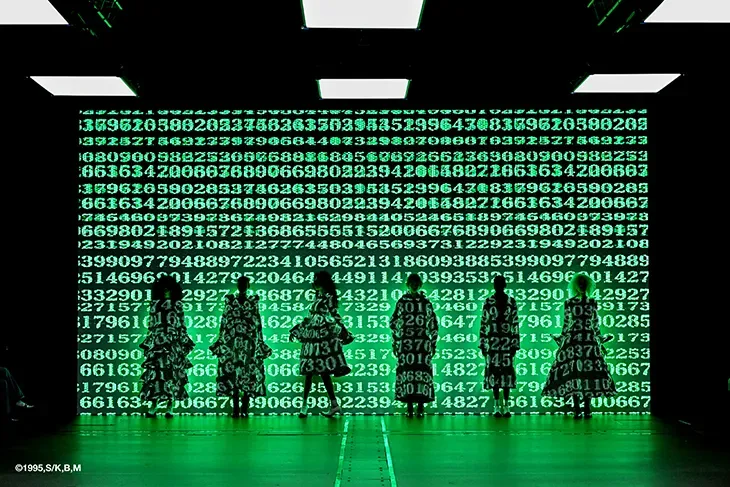
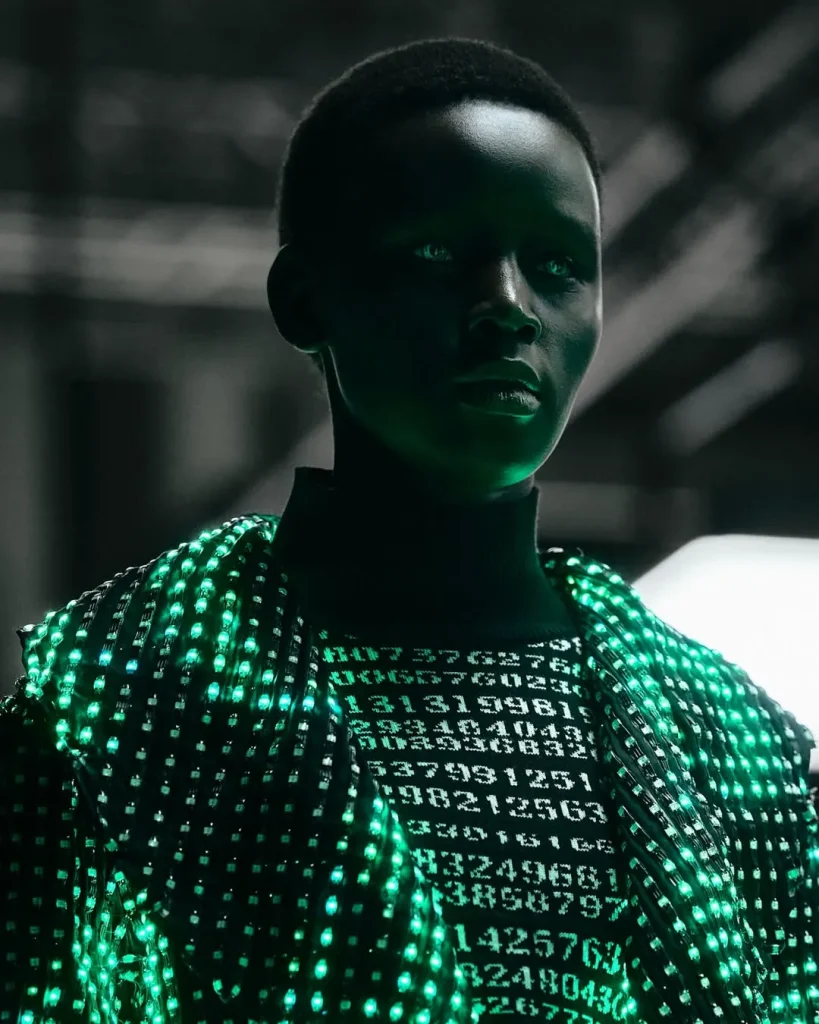
Titled “Ghost” and deeply inspired by Mamoru Oshii’s 1995 cyberpunk masterpiece Ghost in the Shell, Kunihiko Morinaga transformed the runway into a clinical, digital void. Under low-frequency electronic pulses and stark, cold illumination, models wore exoskeletal garments woven from advanced photochromic fibers. As the fabrics interacted with synchronized LED beams, the clothing achieved a thermo-optical camouflage effect, perpetually vanishing and reappearing against high-definition urban backdrops. The space functioned as an architectural inquiry into the digital age: when the physical silhouette dissolves, what remains of the human soul?
10. McQueen: The Fractured Maze of Domestic Anxiety
Palace: Runway Labyrinth, Paris
Creative Direction: Seán McGirr
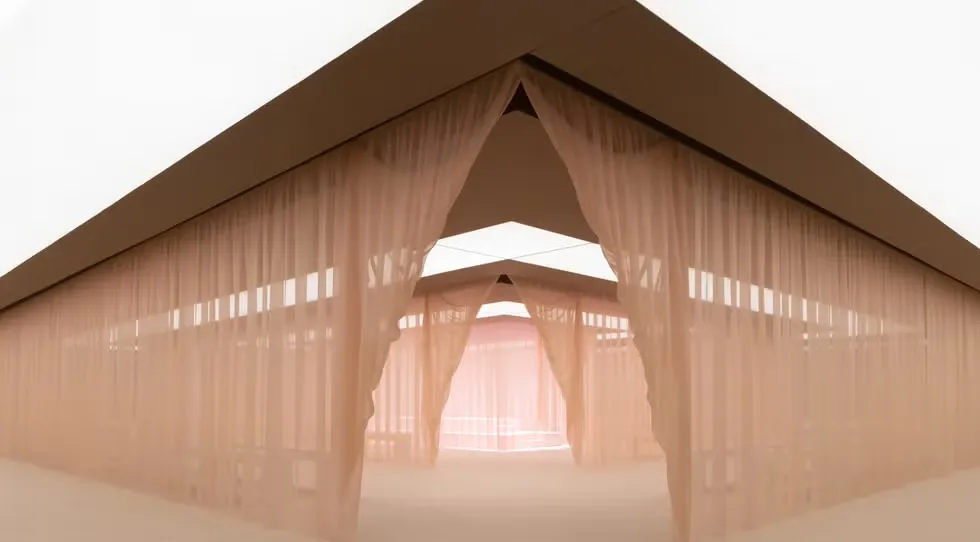
Inspired by Todd Haynes’ 1995 film Safe, creative director Seán McGirr and Tony-winning scenic designer Tom Scutt constructed a psychological labyrinth made of heavy, sweeping drapery. The helical maze of curtains destabilized the pristine surface of idealized domestic life, stirring a visceral sense of anxiety reminiscent of the glossy, 24-hour digital gaze. As the fabric corridors fractured, raw and tactile elements emerged within the collection—delicate feathers, lace, and organza emerged as private tokens from behind the screens, subverting the clinical perfection of the exterior space.
11. Gucci: Travertine Museums and Scanning Antiquities
Palace: Palazzo delle Scintille, Milan
Creative Direction: Demna Gvasalia
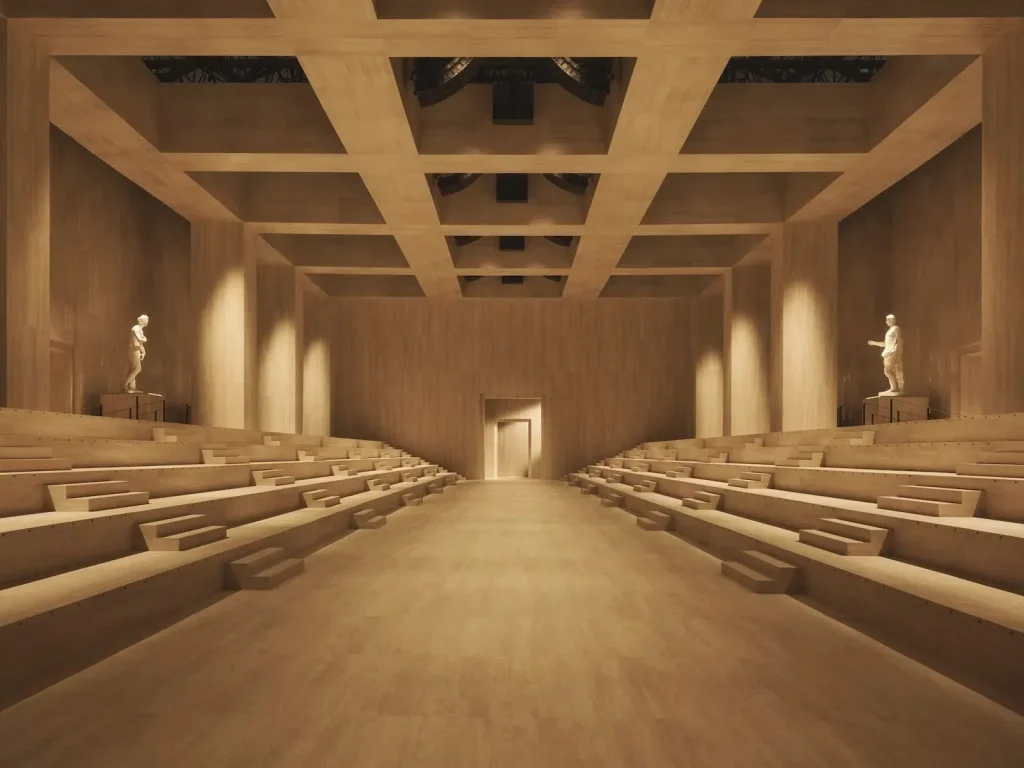
Demna Gvasalia reimagined the historic 1920s Palazzo delle Scintille arena into a monumental, stark museum clad entirely in pale travertine stone. Entitled “Primavera” after Botticelli’s masterpiece, the space was structured by a central “path of light” flanked by symmetrical stepped seating. Symmetrical gypsum sculptures—created via 3D scanning and upscaling classical antiquities from the Uffizi Gallery—framed the runway. By staging raw, hyper-sensual designs against a disciplined, hyper-classical architectural grid, the scenography explored the tension between historical weight and raw, contemporary desire.
12. Valentino: The Baroque Tension of Resonance
Palace: Palazzo Barberini, Rome
Creative Direction: Alessandro Michele
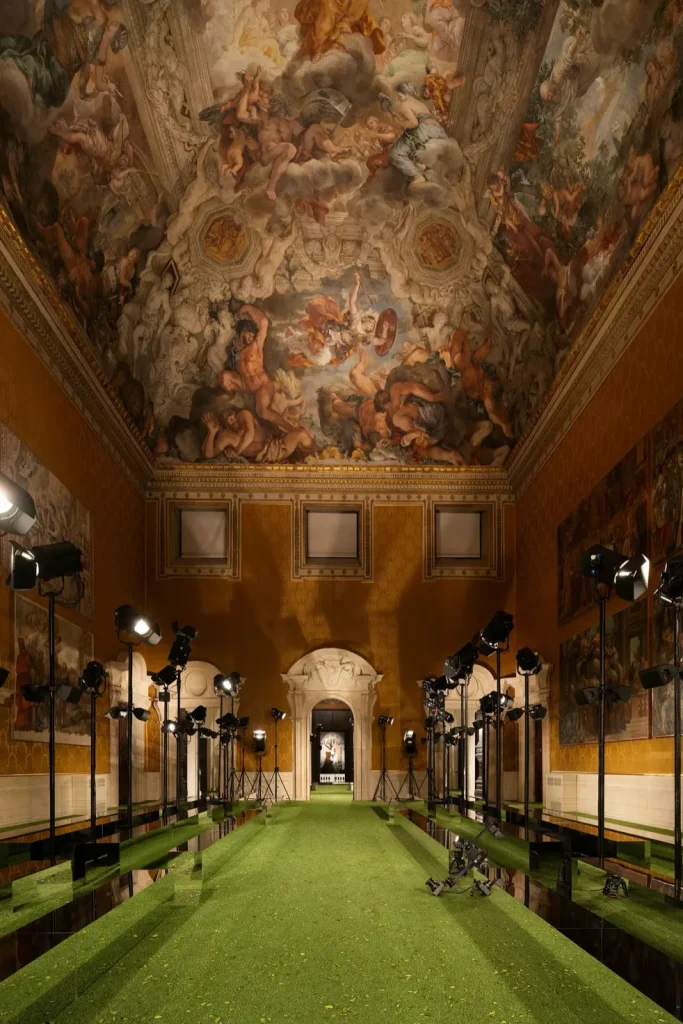
For his “Interferenze” narrative, Alessandro Michele weaponized the structural contradictions of Rome’s Palazzo Barberini to frame a dialogue on identity and space. The venue famously embodies the historical rivalry between masters Bernini and Borromini—juxtaposing Bernini’s rational, Apollonian linear staircases against Borromini’s ecstatic, Dionysian spiral architectures. Under a monumental ceiling fresco that shatters traditional perspective, Michele used the space to mirror deviations and scale distortions within the garments, proving that true creativity thrives in fields of unresolved architectural tension.